Small music venues registered as restaurants face suspensions for dancing under rules meant to curb nightclub-like businesses
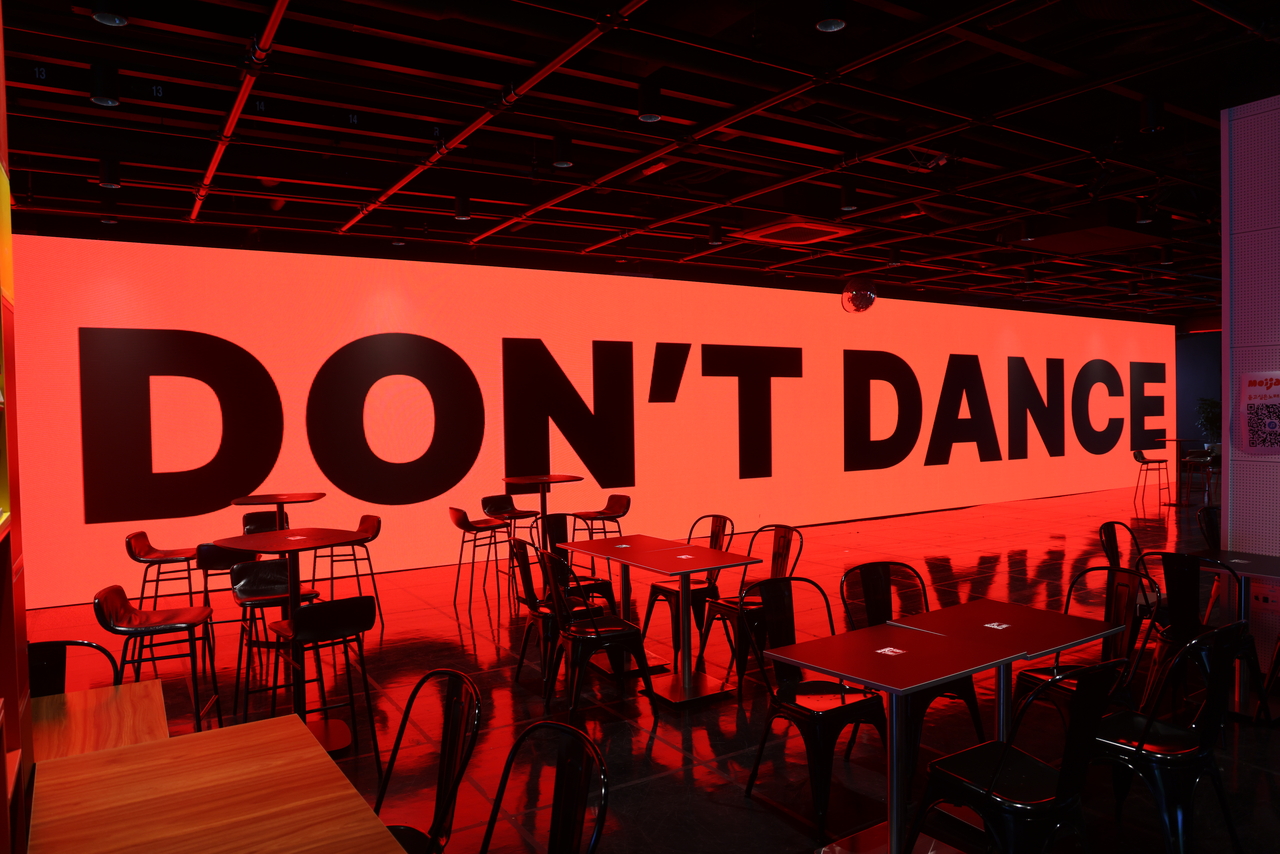
At a party in Jeonju, North Jeolla Province, on Saturday night, there was one unusual rule: Dance all you want, but only for 10 minutes.
Pounding electronic beats pulsed through a small performance space near Jeonju Hanok Village, where partygoers danced beneath a spinning mirror ball with their hands in the air, following the DJ’s every cue.
Then a message suddenly appeared on the giant screen telling them to stop dancing.
Those who failed to stop were given a warning sticker. Anyone caught dancing again was escorted by black-clad guards to a mock jail in the corner of the venue. They could return to the party only after writing an apology letter.
Dubbed the "Party where you can’t dance," the event turned the dance floor into a survival-show set.
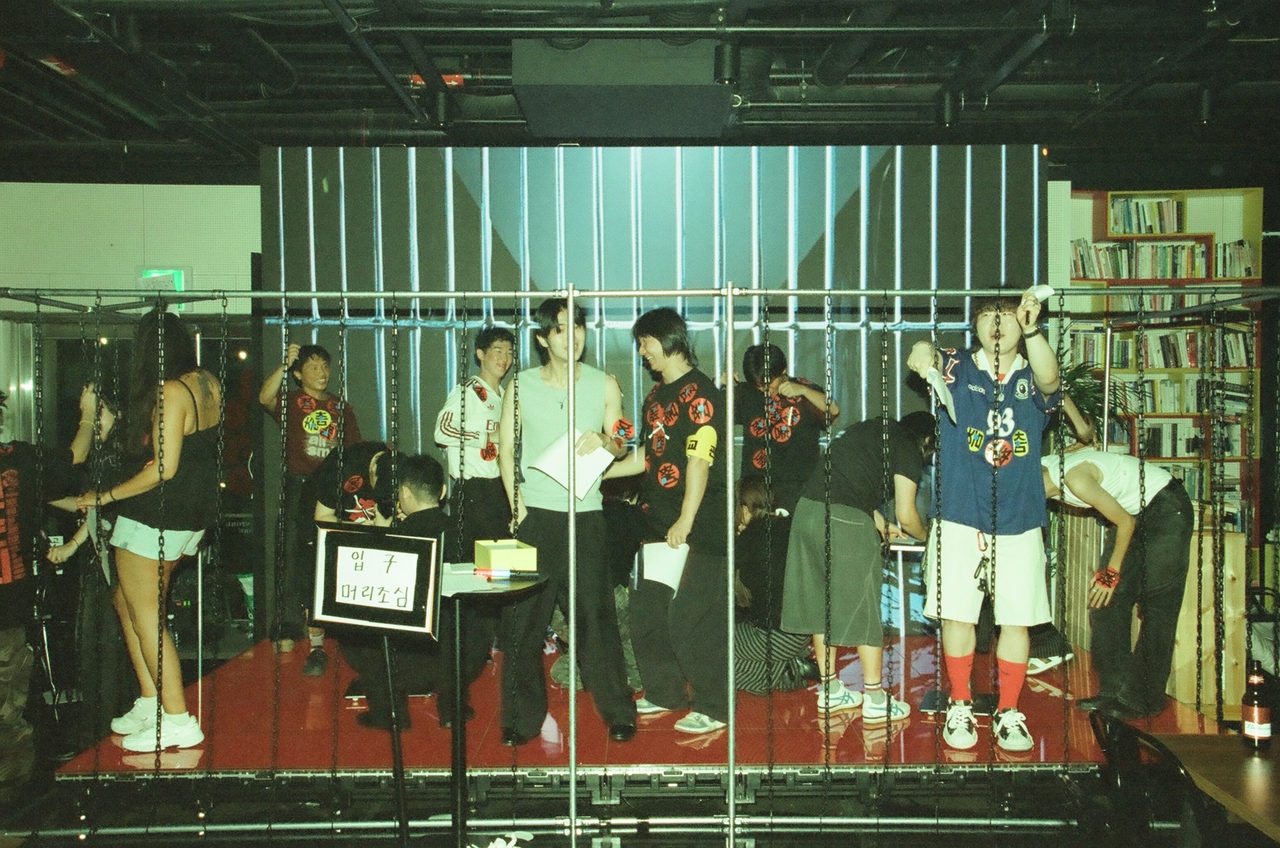
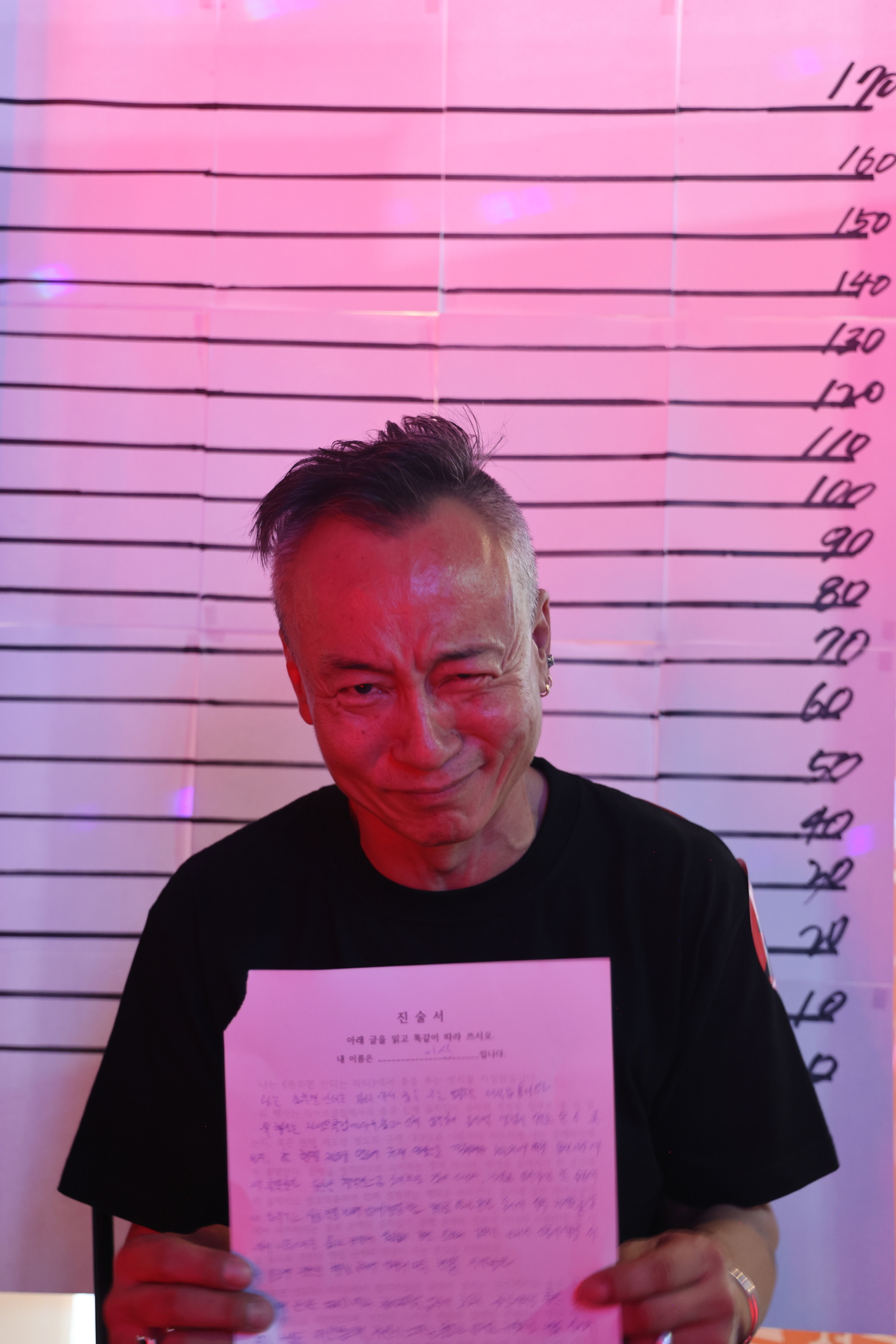
"Even when dancing wasn’t allowed, the music kept playing, so a lot of people would just start moving without even realizing it. Some got put in jail, while others just ran when they got caught," Lee Sun-hee, an electronic musician and member of the Jeonju branch of art collective Urban Strikers who organized the event, told The Korea Herald.
The no-dancing rule took effect after the first 10 minutes of the party, which ran from 9:30 p.m. to midnight, and was lifted only for the final 20 minutes, sending the crowd back onto the dance floor, Lee added.
The whole thing may have looked like a performance, but the rule at its heart was closer to reality than it seemed. At some small music venues in Korea, dancing is technically illegal.
Music on, dancing off
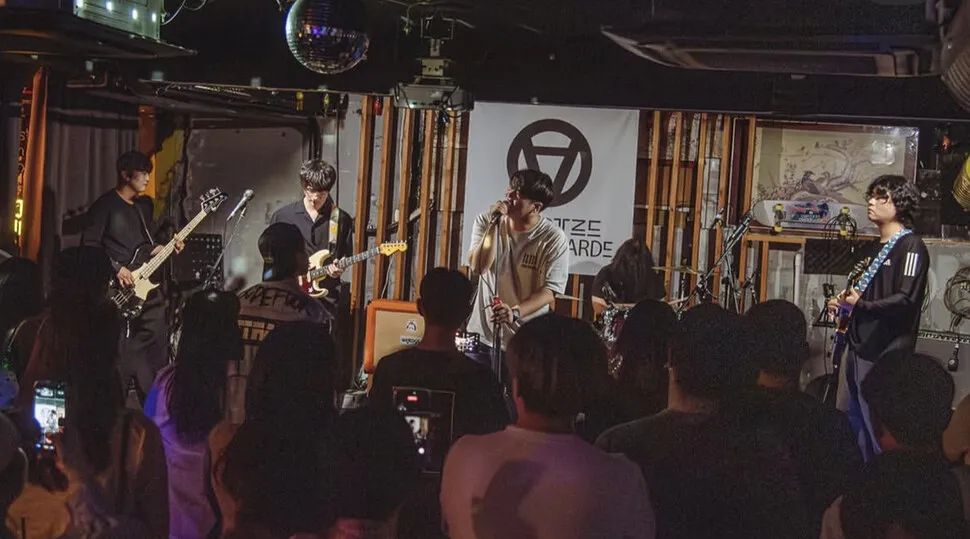
Ovantgarde, a small live music club that opened in Daeyeon-dong, Busan's Nam-gu, in 2018, was recently handed a two-month suspension after district officials found audience members dancing during a live performance.
The dancing put the venue in violation of regulations under the Food Sanitation Act, which bar general restaurants equipped with sound and lighting systems from allowing customers to dance.
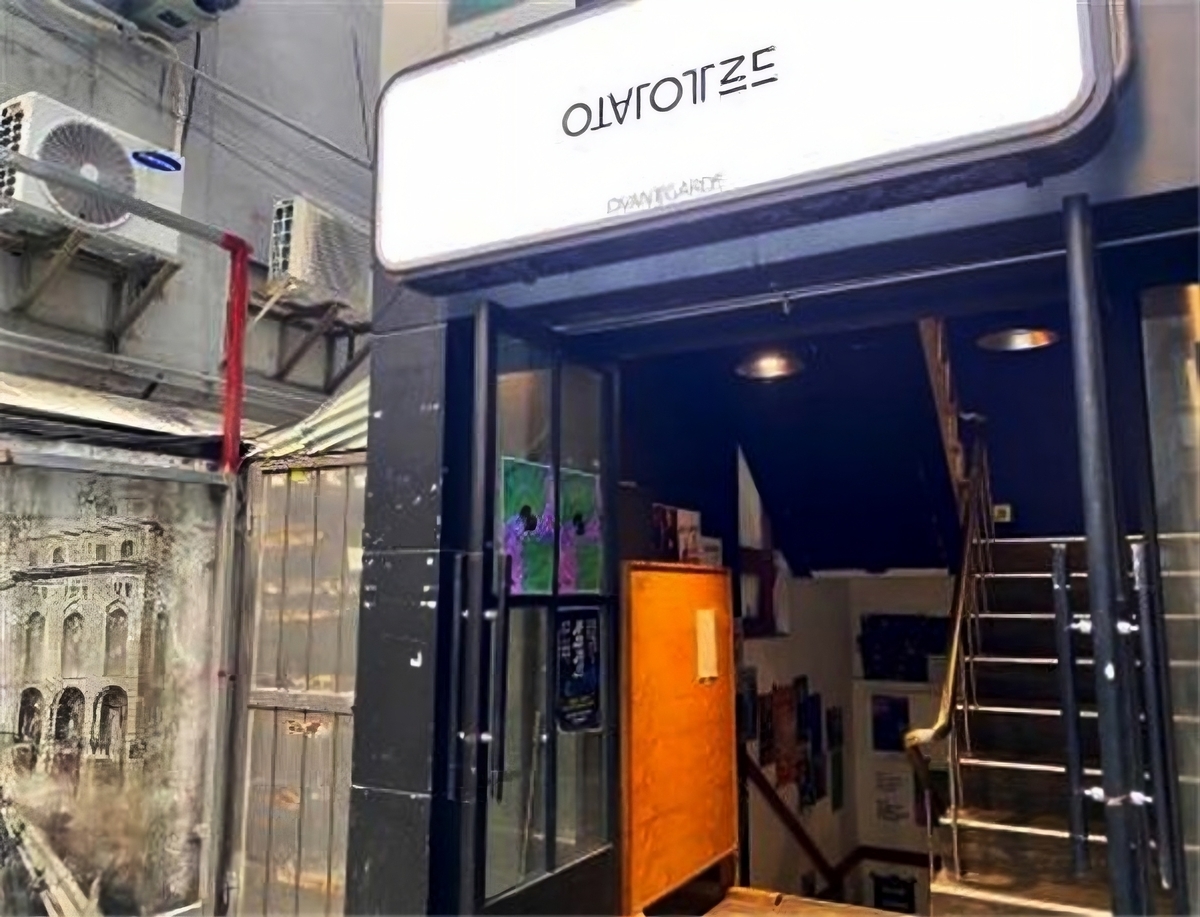
The incident immediately sparked an outcry across the indie music community, with many saying the case laid bare a long-standing regulatory problem facing small music venues.
Many of these establishments, commonly known in Korea as "live clubs," are registered as general restaurants so they can serve food and alcohol during shows, a key source of revenue for their operations.
"When young, lesser-known musicians perform, we sometimes don’t even charge them a venue rental fee. We don’t host shows that often either, so we simply couldn’t stay in business on ticket sales alone," said Jeong, a manager at a live club in Mapo-gu, Seoul.
But a dancing ban introduced in 2015 to rein in businesses that blurred the line between restaurants and nightclubs has since swept up these venues as well.
At the time, authorities were grappling with a growing number of so-called “gamseong jujeom,” where customers drank, danced and mingled to pop hits from the late 1990s and early 2000s.
Despite their club-like nature, they are often often registered as general restaurants, to sidestep heavier tax burdens and regulations imposed on "nightlife businesses." Clubs and other affected establishments are subject to an individual consumption tax and education tax charges totaling equivalent to 13 percent of their takings on food and drink.
The rule has created a peculiar reality at many live venues, where music fills the room but audiences are legally expected not to dance. Some caution customers as they enter. Others put up signs explicitly telling them not to dance.
"Dancing is one of the most basic forms of emotional expression and an important way for performers and audiences to connect. Live clubs were being suspended over dancing long before what happened at Obangarde. We organized this event because we felt it was troubling that outdated regulations could limit such a fundamental form of cultural expression," Lee said.
No legal status
At the heart of the issue, indie music insiders say, is a legal system that has no clear place for live venues.
Registering as a performance venue under the Performance Act could free them from restrictions on dancing, but doing so is not a realistic option for many of them.
To qualify, a venue must host performances for at least 90 days a year or for 30 consecutive days. Many live clubs hold shows only on certain days or weekends, making the requirement difficult to meet. Meeting the safety and facility standards for registration can also be costly for small, independent operators, according to Lee Seung-chul, co-owner of Ovantgarde.
Even if a live club registers as a performance venue, another problem remains. It cannot sell food and drinks in the same space where performances are held.
"One of the appeals of live music clubs is that people can have a beer while watching a performance in the same intimate space. It is part of the experience that sets these venues apart from conventional performance venues," Lee said.
"Live music clubs have been part of Korea’s music scene for decades, yet they still have no legal category of their own, leaving them caught between regulations that were never designed with them in mind."
Lee noted that registering as a nightlife establishment is no simple alternative either. It would mean higher taxes, restrictions on teenage musicians and requirements for staff to register as entertainment workers.
Recognizing the reality facing live clubs, some local governments have eased the dancing ban through local ordinances.
Eight districts across the country currently allow customers to dance at general restaurants under such rules. They include Gwangjin-gu, Mapo-gu, Seodaemun-gu and Yongsan-gu in Seoul, Busanjin-gu in Busan, Seo-gu and Buk-gu in Gwangju, and Jung-gu in Ulsan.
But calls for broader legal and regulatory changes have grown among music groups since the Obangarde case, with critics pointing to the limits of relying on local ordinances.
"The exceptions can change depending on who leads the district or on other circumstances. In some districts, dancing is allowed only in the seating area, and venues can still face suspension if they create a separate dance space. Local ordinances cannot be a fundamental solution,” said Kim, a guitarist in Jeonju.
Music groups have recently stepped up efforts to push for broader legal changes.
Rockjangnol, a group of live music fans, submitted a policy proposal to the National Assembly’s Culture, Sports and Tourism Committee late last month, calling for revisions to the Food Sanitation Act to create a new registration category for small music venues.
"Small live clubs like Ovantgarde are important cultural spaces where musicians who may not have the chance to perform at large venues can connect with fans, build an audience and get their music heard," a Rockjangnol member said.
"What happened at Ovantgarde shows how existing regulations fail to reflect the way live clubs actually operate, how audiences experience and participate in live music, and the practical realities these small venues face. Rather than relying on temporary fixes whenever problems arise, we need a nationwide regulatory framework that takes these characteristics into account."
cjh@heraldcorp.com